



撒部與他的把路兒家庭 Sapud & Parod Family -《Parod 爐灶》專輯
Parod (把路兒) 在阿美族語裡有著「爐灶」的意思,是生命、生活之必需,能撐起並興旺一個家,有生命、家庭、文化延續之意。撒部的「Parod 把路兒家庭」位於花蓮東海岸、被山海環繞的 Makota'ay 港口部落,是少數仍堅持使用族語的現代家庭。爸爸Sapud (撒部) 以族語創作,和孩子一起唱母語歌曲,透過歌唱自然融入生活、環境與經驗。
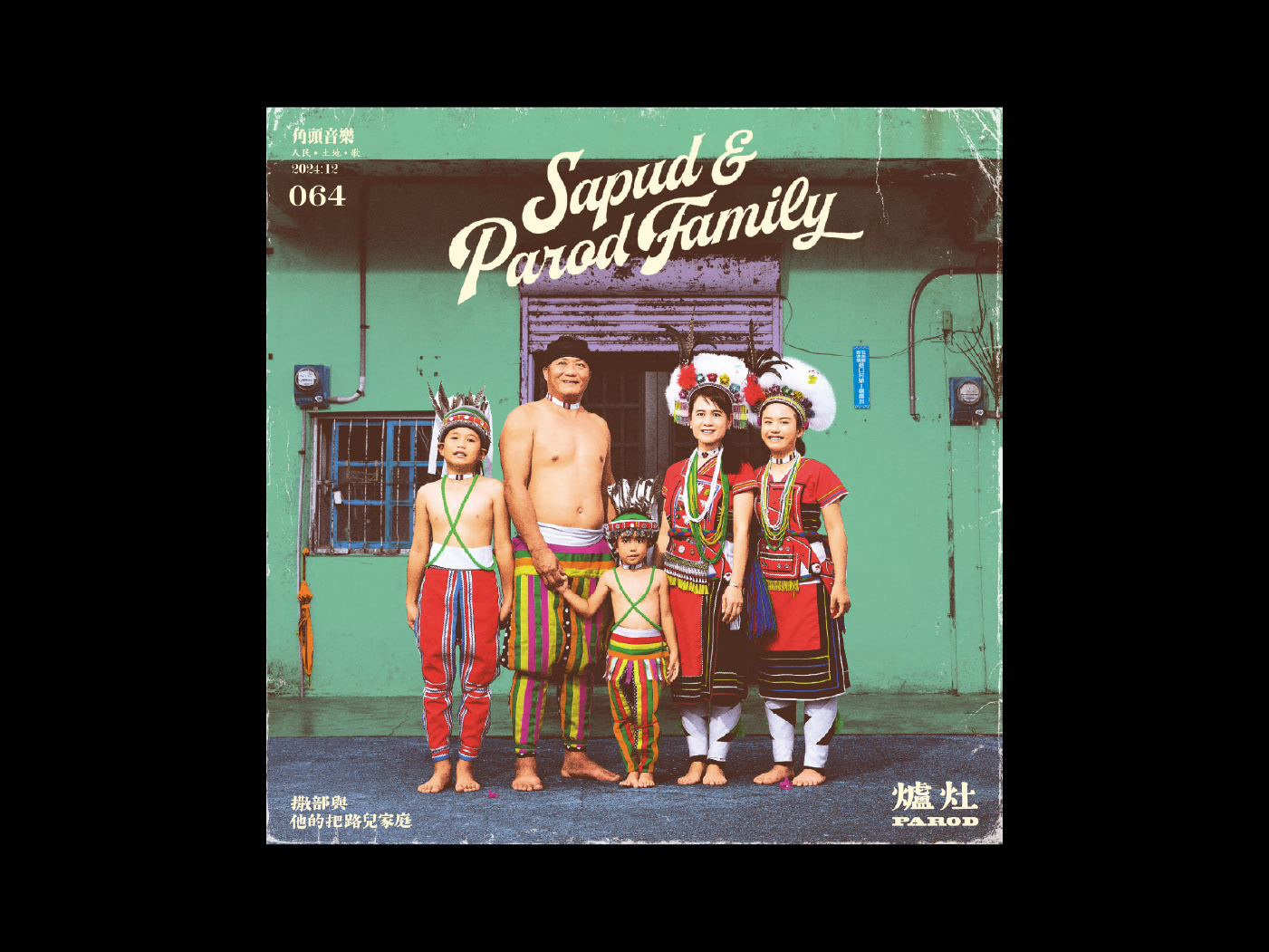
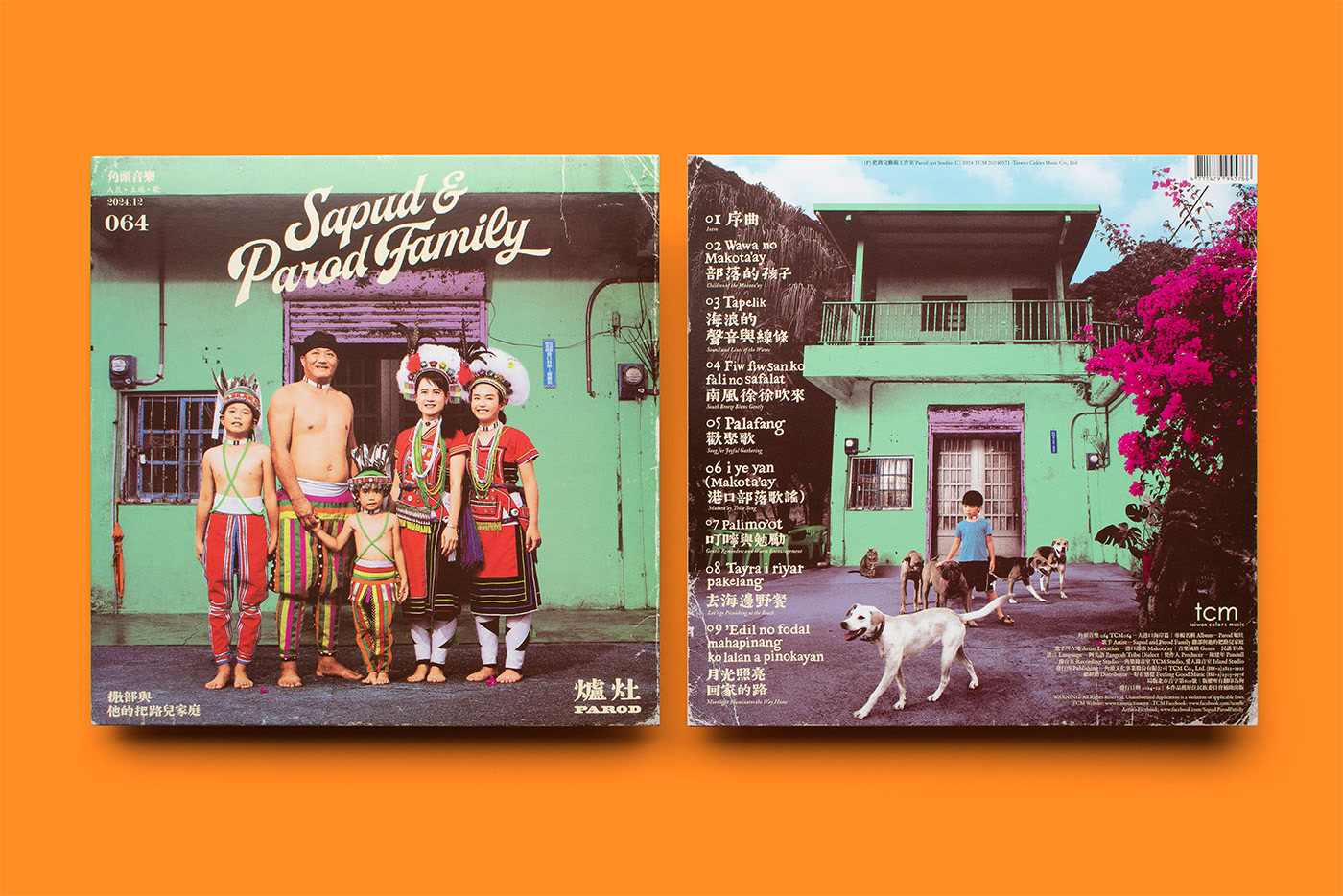
專輯忠實再現「把路兒家庭」的部落日常。封面以他們站在面海小坡上家門口拍攝的全家福為主,透過歌詞本引領聽眾「步入」他們的生活空間,手工製作的餐桌、生活感的廚房、通往海邊的小徑、屋外盛放的桃紅九重葛⋯⋯,在生活場景中陸續出場的家庭成員,串聯每個生動的畫面,封底則溫暖呈現小兒子Parod與動物家人們的互動。手繪的字體與黑白照片手工上色,以純粹、質樸、低科技的方式,呈現把路兒一家人簡單自然卻繽紛的日常。
Parod (把路兒) means "hearth" in the Amis language—a vital element for life and living. It sustains and nurtures a home, symbolizing continuity of life, family, and culture. The "Parod Family" of Sapud (撒部) lives in the coastal Makota'ay community on Taiwan's East Coast, surrounded by mountains and sea. They're one of the few modern families that still speak their Indigenous language. Sapud composes songs in Amis and sings them with his children, blending language, environment, and lived experience through music.
This album faithfully captures the Parod family's everyday life in the tribe. The cover features a family portrait taken in front of their seaside home, standing on a small slope overlooking the ocean. The lyrics booklet invites listeners to “step into” their living space—handmade dining table, homey kitchen, the path leading to the beach, and blooming fuchsia bougainvillea. Each family member appears naturally in these everyday scenes, weaving together a vibrant portrait of their life. The back cover warmly portrays the youngest son Parod interacting with their animal companions.
Hand-drawn typography and manually colorized black-and-white photos reflect the family's simple yet vivid lifestyle, using a pure, humble, and low-tech aesthetic to present their colorful and grounded everyday world.
攝影: 邱德興 (久原)
印刷: FuFu Print Inc.